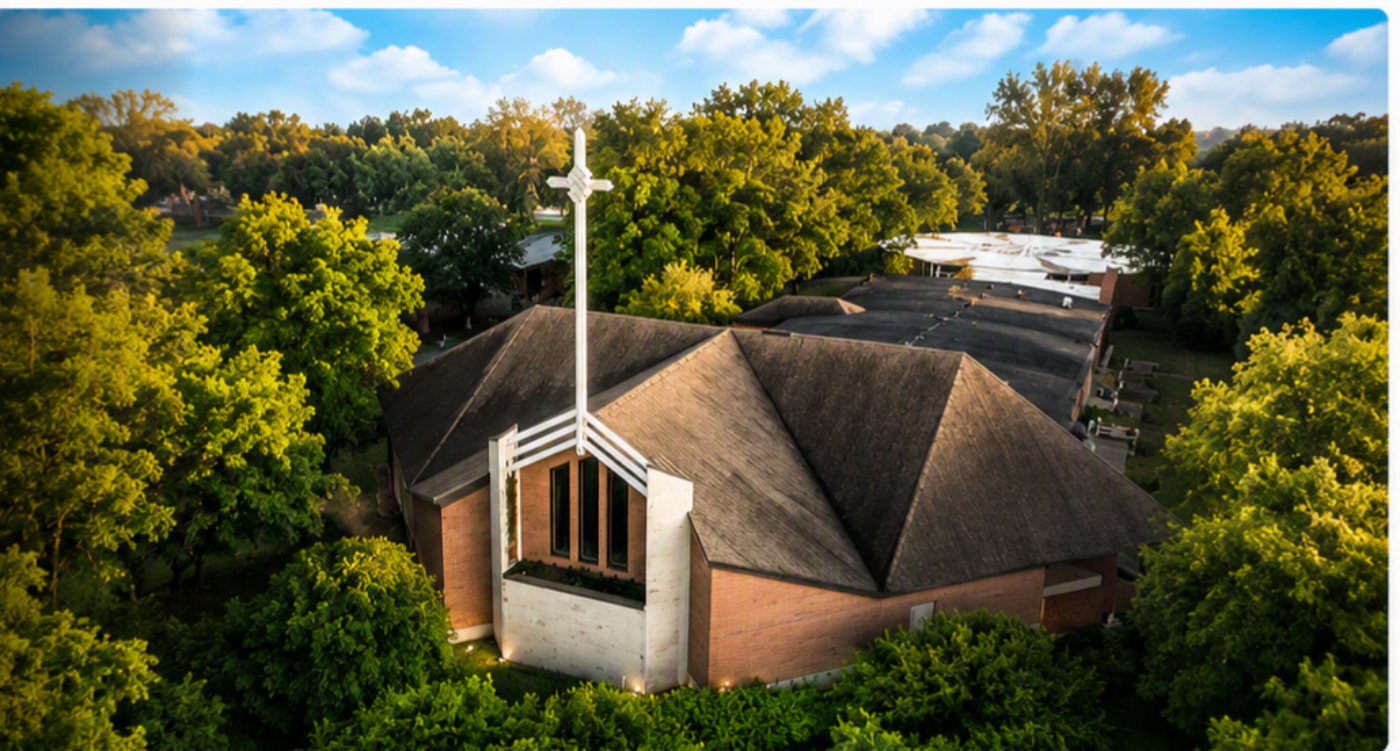
✦ Saint Rafka Maronite Church ✦
Our History
One Faith, One Family, One Future
2003
to
2007
✦ Chapter One ✦
The new mission community was led by Fr. John Paul Kimes and supported by Chorbishop Michael Kail of Saint Sharbel Church. During these early years, the community of Saint Rafka Mission celebrated several "firsts": the first annual church picnic, banquet, and a visit from the late Patriarch Mar Nasrallah Boutros Sfeir. The community also hosted a memorable Mardi Gras-themed fundraiser which later became a big portion of the down-payment for the purchase of a future church property.
During this time, the community adopted the name "Saint Rafka Maronite Mission" and the motto of "One Faith, One Family, One Future," a simple phrase that became both a reminder of who the community is as well as a goal toward which the community constantly strives. Having a consistent schedule of Sunday Divine Liturgies, Saint Rafka Mission continued to grow.
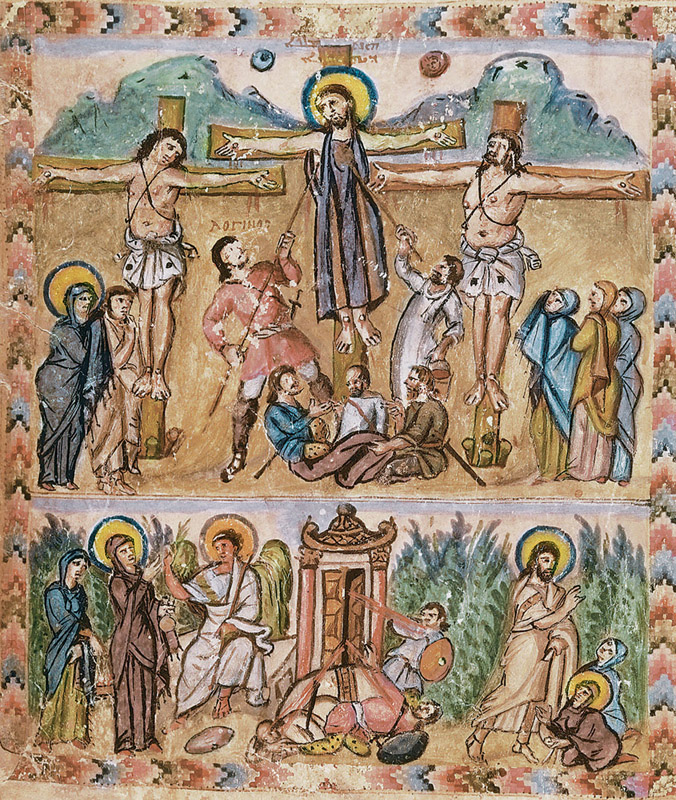
Rabbula Gospels, 586 AD — one of the earliest depictions of the Crucifixion, from the same Syriac Christian tradition from which the Maronite Church descends.
2007
to
2013
✦ Chapter Two ✦
By 2007, Saint Rafka Mission had grown to over fifty families and had outgrown the space in the student chapel at Madonna University. The Mission was able to re-locate to and rent out Saint Maurice Catholic Church in Livonia. The former convent on the St. Maurice property became the Saint Rafka Mission home-base. The convent had a small chapel which was used frequently for prayer services such as the Christmas Novena, the Friday prayers of Lent, and Holy Week. The space also served as a community center for the mission. It also allowed the community to begin holding religious education classes for the youth and social activities for members such as potlucks, card games, youth gatherings, Bible studies, and holiday gatherings.
Saint Rafka Mission continued to grow under the pastoral leadership of priests who served Saint Sharbel in Warren, such as Fr. Gaby Hoyek and Fr. Gary George from 2009 to 2011. This ministerial support from Saint Sharbel Church continued under then Msgr. Alfred Badawi from 2011 to 2013. Saint Rafka Mission was also blessed by the service of the monks from the Maronite Order of the Blessed Virgin Mary, located in Ann Arbor, MI. The Maronite monks that assisted Saint Rafka Mission during that time include Fr. Paul Tarabay, Fr. Joseph Khalil, Fr. Ziyad Antoun, Fr. Nabil Habchi, Fr. Victor Daou, and Fr. John Paul Bassil. The mission was blessed by an Apostolic visit by His Beatitude Cardinal Patriarch Mar Bechara Rahi in May of 2012, in the midst of a major capital campaign, just months before the mission was able to purchase the St. Maurice Catholic Church property, which closed in June of 2012.
2013
to
2014
✦ Chapter Three ✦
In August of 2013, Fr. Tony Massad was assigned as pastor of St. Rafka Maronite Mission, and the purchase of the St. Maurice property was finalized. In April of 2014, Bishop A. Elias Zaidan formally consecrated the purchased church as Saint Rafka Maronite Church, promoting it from a mission to a parish. By this time, the community had grown to over 150 families.
2020
to
Present
✦ Today ✦
On July 1, 2020, Rev. Dr. Rodrigue Constantin was assigned as pastor of Saint Rafka Church, and currently serves the community. The parish holds weekly Sunday Liturgies along with social and faith-based events to serve the community. The community continues to grow in faith and numbers with membership currently at over 250 families.
The organizations and activities within the community promote a deeper knowledge of our faith for children, teens, families and adults of all ages. During the 2013–2014 school year, St. Rafka Church formally opened their religious education program and Arabic language program for youth in first through sixth grades. The Maronite Youth Organization (MYO), which serves youth in 7th – 12th grade, was also started for the 2013–2014 school year.
In 2018, St. Rafka Church established a scholarship program for these youth, rewarding active high school seniors for their participation in both the church and civic communities. The Maronite Young Adult (MYA) organization serves young adults between the ages of 18 to 35 and encourages them to be active in their faith community.